Growing international interest in Carbon Contracts for Difference
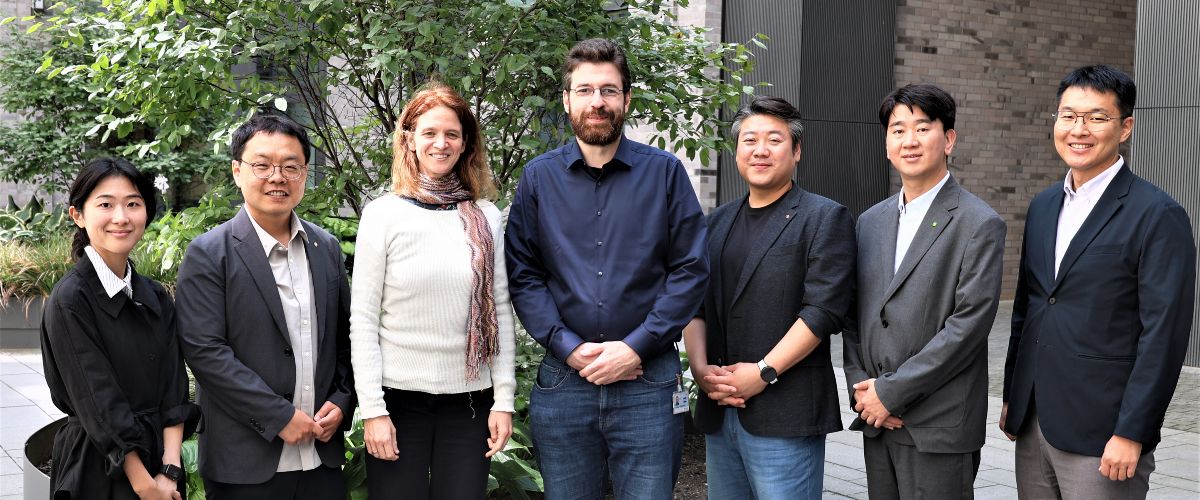 © Projektträger Jülich / Forschungszentrum Jülich GmbH
Delegations from South Korea, India and Australia
Growing international interest in Carbon Contracts for Difference
28 July 2026 | In June and July 2026, the Federal Ministry for Economic Affairs and Energy (BMWE) welcomed several international delegations from South Korea, India and Australia for technical discussions on the design and implementation of the funding scheme. The focus was on Germany’s experiences and issues relating to the financing of industrial decarbonisation.
The delegation visits underscore the international attention that the German model of CO2 differential contracts is now receiving. The instrument is regarded worldwide as an innovative approach to supporting companies in investing in low-carbon production processes whilst safeguarding the competitiveness of energy-intensive industries.
In addition to the basic functioning of the instrument, the discussions focused in particular on questions regarding practical implementation, the funding mechanism and its integration into existing emissions trading schemes. Representatives from the BMWE and the two project management organisations, PtJ and VDI/VDE-IT, reported on their experiences from the programme’s implementation to date.
South Korea is preparing its own pilot programme
A delegation from South Korea kicked off the series of visits on 3 June 2026. Representatives from the Ministry of Climate, Environment and Energy and the Korea Environment Corporation (K-eco) visited the BMWE to learn about Germany’s experience with CO2 differential contracts.
Particular interest centred on South Korea’s plans, as the country has already launched its own funding programme. The delegation reported on current developments within the government, particularly regarding financial risks and potential interactions with the Korean Emissions Trading System (K-ETS). The focus was on questions concerning the assessment of technology risks, the avoidance of inefficient funding, and possible impacts on the CO2 price.
At a further meeting between the Korea Energy Agency (KEA) and the PtJ at the end of July, detailed issues relating to bid evaluation, award of contracts and monitoring were discussed. The two programmes were compared, and ways in which elements of the German CCfD could be applied to the Korean programme were identified.
In addition, the participants discussed methods for determining maximum support prices and the lessons learnt from the German preliminary procedures.
India seeks financing solutions for industrial decarbonisation
On 9 June, a twelve-member delegation from India arrived in Berlin as part of a study tour organised by the Asia Society Policy Institute (ASPI). The participants included high-ranking representatives from national and regional government bodies, industrial companies, industry associations and academic institutions.
The visit was prompted by the Indian government’s decision in 2022 to introduce a national emissions trading scheme. In March 2026, the Indian Carbon Market Portal, the central platform of the new system, became operational. Unlike the EU Emissions Trading Scheme (EU ETS), the so-called Carbon Credit Trading Scheme (CCTS) is not based on an absolute emissions cap, but on emissions intensity targets.
The CCTS forms the core of the emerging Indian CO2 market. It already covers several energy-intensive industrial sectors and is designed to promote investment in low-emission production processes and support industrial transformation. Against this backdrop, the exchange on German CO2 differential contracts provided valuable insights into a complementary policy instrument.
During a specialist presentation, the objectives, functioning and governance structures of the German programme were outlined. This was followed by a lively discussion on the interactions with the European Emissions Trading System, the scale of the expected emissions reductions, and the financing of projects during the period between the investment decision and the start of funding payments.
The presentation of a funded industrial project by the chemical company BASF also attracted particular interest. The participants viewed the insights into the practical implementation of a transformation project and the concrete benefits of the funding as a valuable complement to the political and regulatory aspects.
Exchange of experiences with Australia
Finally, on 11 June, an Australian delegation visited the BMWE as part of the German-Australian Energy and Climate Partnership. The group comprised experts from politics, industry and research and focused on exchanging views on transformation pathways for industry as well as possible avenues for cooperation between the two countries.
The visit centred on a presentation of the German carbon contracts for difference and an exchange of experiences regarding the ramp-up of the hydrogen market in both countries. The Australian delegation showed great interest in Germany’s experience with carbon contracts for difference.
International dialogue is gaining in importance
The discussions make it clear that the decarbonisation of energy-intensive industry presents similar challenges to countries around the world: How can investment in low-carbon technologies be incentivised? How can support programmes be designed efficiently? And how can these be integrated with existing or emerging emissions trading schemes?
Ongoing dialogue with international partners offers all sides the opportunity to share experiences, learn from one another and support the development of effective instruments for industrial transformation worldwide.